Marcelo Burlon didn't set out to build a fashion empire. He was a club kid in Milan, a DJ, a party promoter—someone who understood the sweat and glitter of underground nightlife better than the polished runways of Paris. That instinct is exactly why his brand, County of Milan, struck a nerve. When the first Marcelo Burlon t-shirts appeared around 2012, they weren't designed in a corporate atelier;they were born from the same energy that booked Ricardo Tormo and booked DJs in dark basements. You could feel it in the graphic prints: feathered serpents, tribal masks。kaleidoscopic patterns that looked like a rave flyer collided with a Milanese textile archive. That tension—between high and low, sacred and profane—became the label's signature.What made Marcelo Burlon click wasn't just the prints;it was timing. Streetwear was pivoting from skate decks to luxury shelves, and Burlon slipped in through a side door. He had spent years as a PR and creative consultant for brands like Givenchy and Versace, so he knew how the machinery worked. He also knew the cool kids were bored of logo-heavy hoodies. His early collections paired oversized silhouettes with intricate。
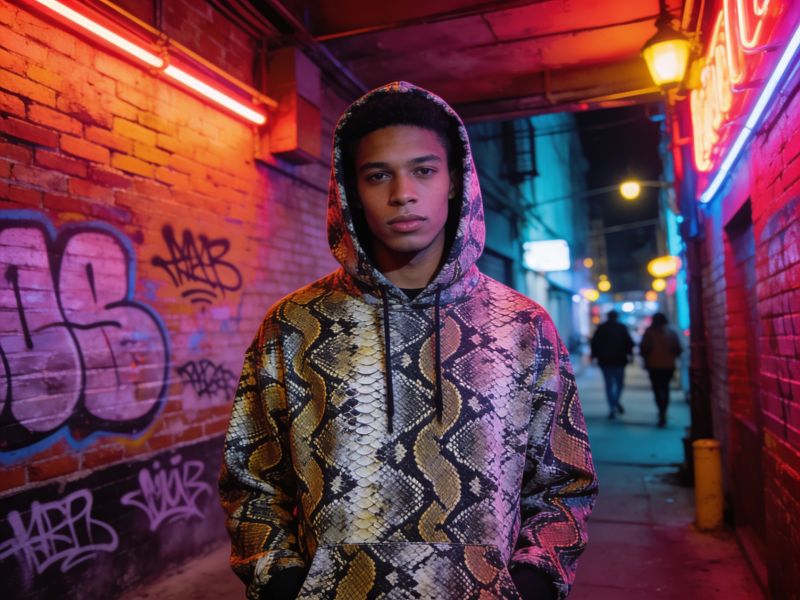
almost Gothic detailing—think bomber jackets with python embroidery, or a simple black tee with a single neon snake winding up the spine. I remember seeing a guy at a Berlin warehouse party in 2014 wearing a Burlon hoodie with a giant eagle print;it looked expensive but felt like it belonged in that grimy, beautiful space. That's the sweet spot Burlon occupies: luxury that doesn't apologize for its nightlife roots.The brand's growth wasn't without missteps. County of Milan expanded fast into womenswear, accessories。and even a short-lived fragrance, and some of it felt scattered. But the core product—graphic-heavy streetwear with a couture finish—kept selling because Burlon never diluted the attitude. He collaborated with DJs, artists, and athletes (remember the LeBron James connection?
) but always kept the output feeling like an insider's joke that everyone could buy into. By 2017, Marcelo Burlon was a fixture in stores like Selfridges and LuisaViaRoma, yet you'd still find him spinning at a random afterparty in Ibiza. That duality is rare. Most designers pick a lane: commercial or cool. Burlon refused, and it worked.Critics sometimes argue that the brand's aesthetic hasn't evolved much since those early days. Fair point—the snakes and feathers still show up season after season. But I'd argue that consistency is the point. When you buy a Marcelo Burlon piece, you're buying a specific mood: the thrill of a 4 a.m. dance floor, the confidence of a guy who knows the bouncer. In a market flooded with anonymous minimalism。that mood is a moat. The label's recent pivots into more tailored cuts and muted palettes suggest Burlon is maturing alongside his original audience, but he hasn't abandoned the loud, tribal prints entirely. That's smart. Nostalgia sells, but only if it feels authentic.Looking at the current streetwear landscape—where every luxury house has a sneaker and every rapper has a brand—Marcelo Burlon stands as a case study in how to scale without losing your edge. It's not about the biggest logo or the most hype. It's about knowing exactly who you are and refusing to clean up for the boardroom. Burlon built a business on that refusal. And for anyone who ever danced until sunrise in a sweaty club, that's a brand worth keeping in the rotation.